
Originality or Honest Restoration? Choosing an Antique Clock
Buyers often ask whether an antique clock must be completely original to be worth owning. In reality, a working mechanical object may have received careful attention over many generations. The important distinction is between sympathetic restoration that preserves the clock and alteration that obscures its identity.
This question applies equally to antique longcase clocks and antique railway clocks. When comparing antique clocks for sale, buyers should look for honesty, compatibility and quality rather than expecting every wearable component to remain untouched.
What originality means in a longcase clock
A longcase clock is a partnership between movement, dial and cabinet. Ideally, these elements began life together and still fit one another naturally. The movement should sit correctly on its seat board, winding holes should align with the dial, and the dial should be proportioned for the hood.
Altered supports, unused holes or awkward spacing can indicate that parts were associated later. Association does not prevent a clock from working or looking attractive, but it changes the historical story and should affect the description and price.
A practical guide to dial, case and provenance explains how these physical relationships help buyers assess a complete clock.
Repairs are part of a working life
Mechanical parts wear. Pivots and bushes may need attention, lines and springs can fail, and suspension components are sometimes replaced. Skilled work allows the mechanism to operate safely and may prevent greater loss of original material.
Ask what was done, when it was completed and who carried out the work. A clear service record is far more useful than an unsupported claim that the movement has never been touched. In many cases, a properly maintained clock is a more sensible purchase than one left unused and neglected.
Restoring cases and dials
Cabinet repairs may be necessary where joints loosen, veneers lift or old woodworm damage weakens the structure. Good restoration stabilises the clock while retaining historic timber, colour and tool marks. Heavy sanding and glossy refinishing can remove the surface that gives an old case its character.
Dial restoration requires similar restraint. Paint can flake and silvering can wear, but extensive repainting may alter original lettering and decoration. The seller should disclose known work and distinguish conservation from complete renewal.
Railway clocks require evidence
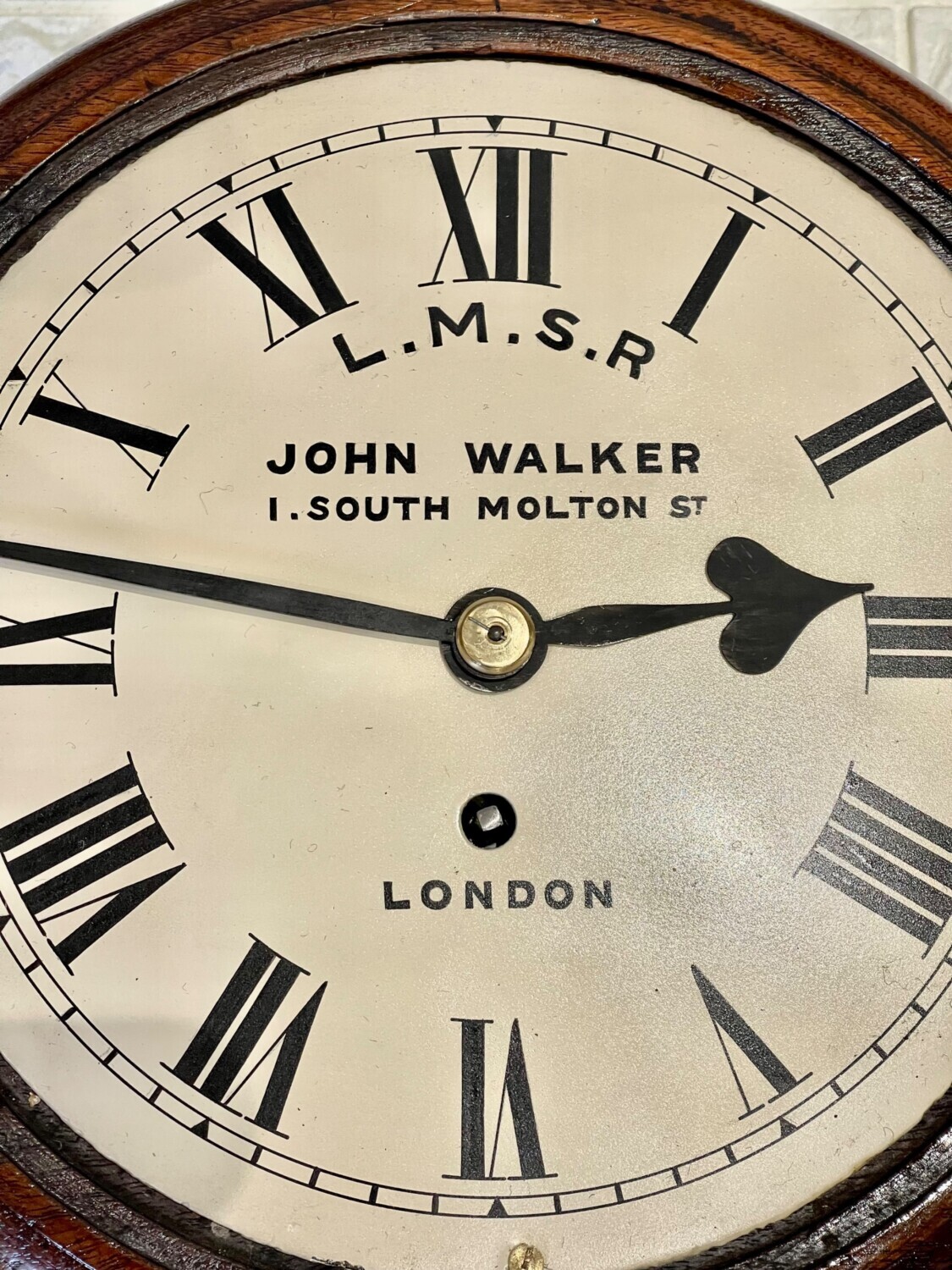
The apparent simplicity of a railway clock can conceal complicated histories. A dial may have been repainted, a movement replaced or a case assembled around unrelated parts. Railway-style design alone does not prove service on the railway.
Maker’s names, case stamps, movement marks, inventory numbers and documentary provenance should support one another. A feature on a railway clock in Gloucestershire shows how a specific clock gains meaning from context as well as appearance.
Questions to ask before buying
Request photographs of the movement and the back or interior of the case, not only the front. Ask about repainting, replaced components and recent servicing. Check exact dimensions and find out whether professional delivery and setup are included.
A longcase clock needs a level floor, adequate height and room for its pendulum and weights. A railway clock requires secure wall fixings appropriate to its weight. Both should be kept away from persistent damp, strong heat and heavy vibration.
Compare descriptions, not just prices
When you buy antique clocks with specialist guidance, clear explanations of condition and restoration make comparison easier. Price should reflect craftsmanship, integrity, rarity, provenance and the quality of any work completed.
A clock with disclosed, sympathetic restoration may be a better choice than one described vaguely as original. Transparency allows the buyer to understand exactly what survives and what has been renewed.
Choose an honest clock
Absolute untouched originality is rare in a useful antique mechanism. What matters is that repairs respect the design, replacement parts are appropriate and the clock’s identity has not been disguised.
Whether considering the architectural presence of a longcase clock or the clear dial of a railway clock, choose the example whose story can be explained. Honest restoration supports both confident ownership and responsible preservation for the next generation.