
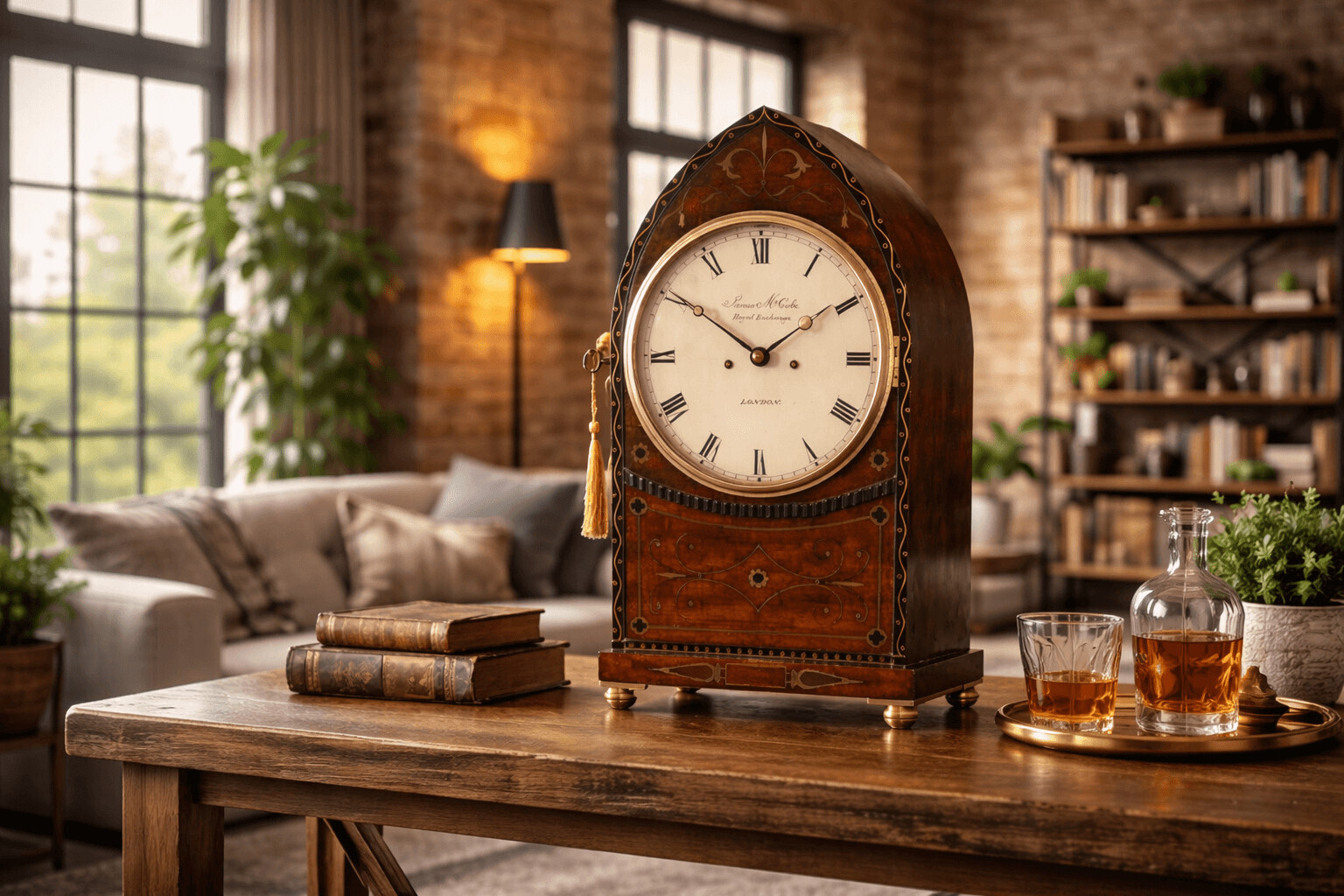
Dial, Case and Provenance: How to Choose an Antique Clock
Choosing an antique clock is an exercise in looking at the whole object. A handsome dial may attract attention first, but the case, movement, restoration history and provenance determine whether the clock has genuine coherence. This is especially true when comparing antique longcase clocks and antique railway clocks, whose original purposes shaped every part of their design.
For buyers exploring antique clocks for sale, a few careful questions can turn an attractive possibility into a confident purchase. The aim is not to find an untouched object, but to understand what has survived, what has changed and whether the clock remains honest and usable.
Start with the dial
The dial is both a practical display and a record of changing taste. Longcase clocks may have brass dials with silvered chapter rings, applied spandrels, subsidiary seconds and date apertures. Later painted dials introduced flowers, landscapes and figures, often with regional variations.
Railway dials generally favour clarity. Bold numerals, strong minute tracks and easily recognised hands allowed station staff and passengers to read the time quickly. Paint can age, and many dials have been refreshed or repainted, so buyers should ask how much of the visible surface is original.
Good proportions matter as much as decoration. The dial should sit naturally in its hood or bezel, and winding holes should correspond precisely with the movement. For a broader comparison of the two traditions, see longcase and railway clocks for today’s collector.
Read the construction of the case
A longcase cabinet protects its pendulum and weights while creating the clock’s architectural presence. Hood, trunk and base should form a balanced design. Timber, veneers, mouldings, door shapes and decorative inlay can all suggest a period or region.
Look for colour and wear that remain reasonably consistent. Fresh timber around joints, unexpected screw holes or sections with a noticeably different finish may indicate alteration. Old repairs are common and not necessarily undesirable, but they should make structural and historical sense.
Railway clock cases were generally practical and robust. Their simplicity can make later replacements difficult to spot, so examine joins, access doors, bezels, labels and stamps. A genuine old case should support the attribution supplied by the dial and movement rather than contradict it.
Understand the movement
The movement is the working centre of the clock. On a longcase example, check whether it sits correctly on the seat board and whether the pendulum and weights are appropriate. Unused holes, packing or awkward alignment may reveal that the movement and case were brought together later.
Railway clocks require the same attention to compatibility. Maker’s marks and serial numbers can be useful, but they should be interpreted alongside the rest of the object. A feature on a railway clock to buy in Gloucestershire demonstrates how a specific example can be understood through form, maker and context.
Mechanical service is normal. Pivots, bushes, lines and suspension parts wear through use, and careful replacement protects a clock from further damage. Ask when the movement was last serviced, what work was completed and whether any guarantee is included.
Judge restoration fairly
Restoration should preserve character while making the clock stable and functional. A well-executed repair may be nearly invisible, but it should never be deliberately concealed from a buyer. Documentation is valuable because it explains why work was needed and who performed it.
Heavy refinishing can remove historic colour, tool marks and natural wear. Conversely, neglected damage should not be romanticised as patina. Active woodworm, loose joints, flaking dial paint or a dirty movement require proper attention rather than cosmetic treatment.
The most satisfying clocks often occupy a sensible middle ground: visibly old, sympathetically cared for and ready for responsible use.
Ask what provenance can prove
Provenance may connect a clock with a maker, owner, house, station or railway company. Labels, receipts, service records, photographs and family history can all help, but stories should be separated from verifiable evidence.
A famous name on the dial is not sufficient on its own. Signatures can be repainted, and components may move between cases. Strong provenance agrees with the physical evidence and remains plausible when compared with documented examples.
Compare antique clocks for sale carefully
Accurate measurements are essential. Longcase clocks require adequate ceiling height, a level floor and room for the trunk door, pendulum and weights. Railway clocks need safe wall fixings and enough surrounding space for their dials to remain visually clear.
Request photographs of the exterior and movement, and ask about delivery and installation. A specialist selection can make comparisons easier; buyers can buy antique clocks with Clockwise while receiving guidance about condition, setup and future maintenance.
Price should reflect quality, integrity, condition, rarity and provenance together. An understated clock with convincing components may offer more lasting pleasure than an elaborate example with an uncertain history.
Choose the clock you will enjoy living with
A clock contributes movement and sound to its room. Consider its tick, strike, winding routine and physical scale, not simply how it appears in a photograph. Once installed, avoid unnecessary movement and use an experienced clock repairer for periodic maintenance.
Whether you choose the furniture-like presence of a longcase clock or the direct clarity of a railway clock, careful observation is the best buying tool. Dial, case, movement and provenance should tell one compatible story—and that story should remain interesting long after the purchase.