
Reading an Antique Clock Dial: Longcase Detail and Railway Clarity
The dial is often the first thing a buyer notices, but it can tell more than the hour. On antique longcase clocks it may reveal decorative taste and regional character; on antique railway clocks it usually reflects the practical need for instant legibility. Looking closely at the dial, while considering the case and movement around it, is a useful way to compare antique clocks for sale.
Why longcase dials vary so much
A longcase clock was intended to be lived with in a home. Its dial could therefore display both timekeeping information and a maker’s sense of style. Brass examples may use a silvered chapter ring, applied corner ornaments, a seconds dial or a date aperture. Painted dials can introduce flowers, landscapes and other scenes, giving two clocks of similar size quite different personalities.
Decoration should be assessed in context. A dial needs to fit its hood naturally, and its scale should suit the cabinet. Regional traditions can be especially distinctive, as seen in Scottish painted dial longcase clocks. The appeal comes not only from the image on the face, but from the relationship between dial, case and movement.
Railway dials were designed to be read
A station or office clock had a more public task. Staff and passengers needed to understand the time quickly, often from a distance. Strong numerals, a clear minute track and hands that contrast with the face made that possible. This visual discipline explains why many antique railway clocks still look at ease in contemporary interiors.
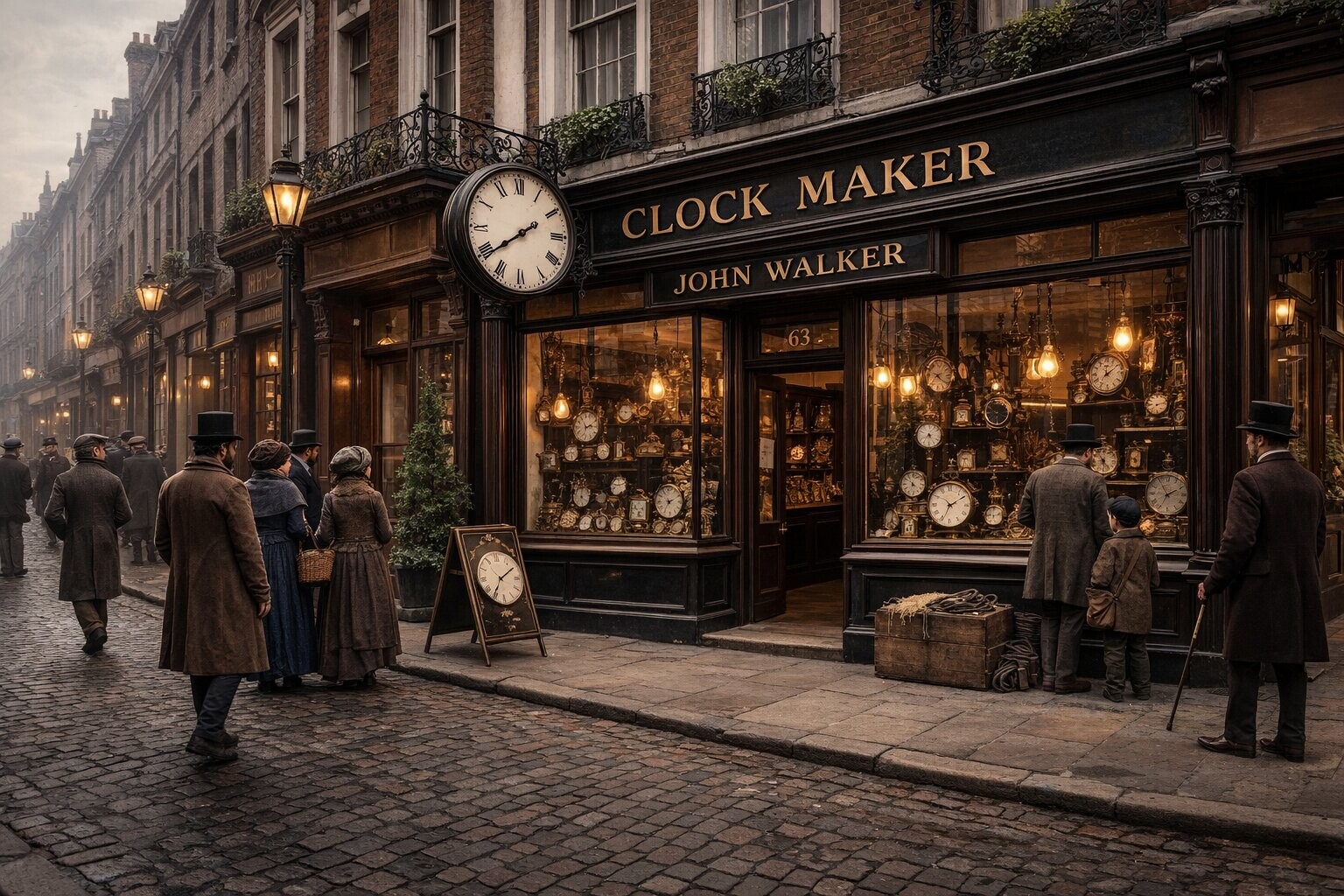
The direct appearance should not be confused with proof of railway service. A convincing attribution depends on compatible evidence from the case and movement, supported where possible by markings or records. A feature on a John Walker railway clock shows why the maker and historical setting matter alongside the dial design.
Check whether the parts agree
On any antique clock, look at how the dial fits. Winding holes should correspond with the movement, hands should move freely, and the face should sit comfortably within its hood or bezel. An awkward fit or altered supports may suggest that components were combined after manufacture. Such a clock can still be enjoyable, but the change should be understood and reflected in its description.
Ask whether the dial has been repainted or refinished. Gentle ageing can be part of an honest surface, while extensive restoration may affect how much original detail remains. A seller should be able to explain known work without relying on vague claims that a clock is “completely original”.
Use the dial to guide practical questions
Before buying, ask to see photographs of the movement as well as the front. Check the clock’s dimensions, the date of its last service and whether delivery includes appropriate setup. A longcase clock needs a stable position and room for its pendulum and weights. A railway clock needs secure wall fixings suitable for the weight of its case.
When browsing antique clocks for sale, compare complete objects rather than faces alone. Quality of construction, condition and a credible history are as important as a striking dial.
Choose a face you will enjoy every day
Some collectors are drawn to the layered detail of a longcase dial; others prefer the bold restraint of a railway clock. Both approaches can make timekeeping beautiful. The best choice is a clock whose dial remains appealing on close inspection and whose case and movement tell the same story.