
Before an Antique Clock Comes Home: A Buyer’s Placement Checklist
Choosing an antique clock is about more than finding a dial or case you love. Before buying, consider where the clock will stand or hang, how it will arrive, and what it needs to run well. These questions are especially useful when comparing antique longcase clocks and antique railway clocks: their original settings were different, and so are their practical demands today.
Measure the space for a longcase clock
A longcase clock needs more than enough ceiling height. Measure the full case, including its finials or raised hood, then allow room to lift the hood and open the trunk door. Check that weights can descend freely and that the pendulum will not touch the cabinet. A level, stable floor matters because a clock that rocks or shifts may struggle to keep an even beat.
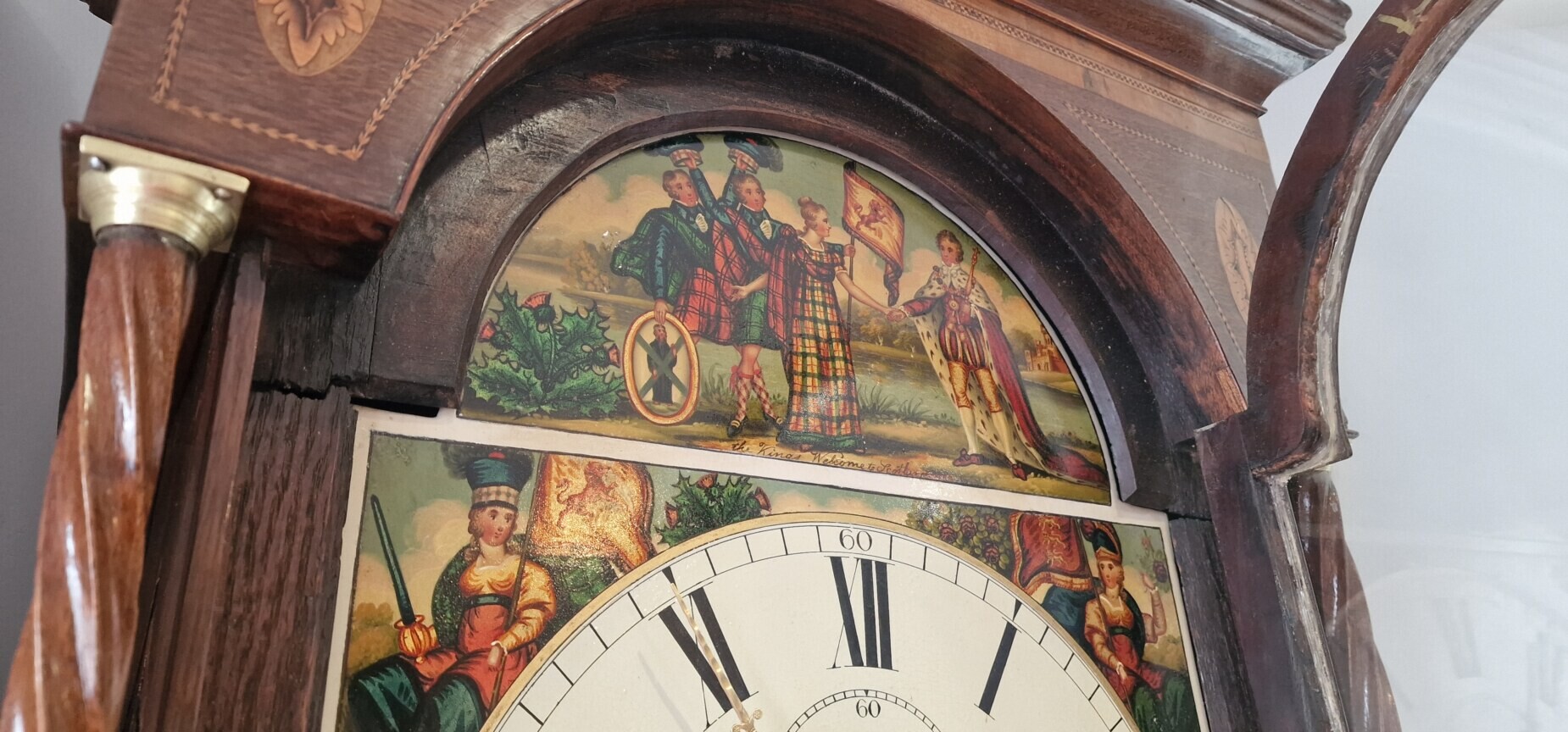
Consider the room’s daily activity as well. A longcase clock placed beside a frequently slammed door may be disturbed, while direct heat or persistent damp is unkind to both timber and movement. Case proportions and dial styles vary considerably; the distinctive Scottish painted dial longcase clocks illustrate how the clock’s visual character should also be considered against the scale of a room.
Plan a safe position for a railway clock
Antique railway clocks were intended to be read clearly from a distance. Give the dial sufficient open wall space and choose a height that makes the hands easy to see. Do not assume that an old plaster wall or a light picture hook will support a substantial wooden or metal case; fixings must suit both the clock and the wall.
Location can also help tell the clock’s story. A well-documented maker, movement and case are more valuable than a railway-style face alone. This John Walker railway clock offers an example of why attribution and construction deserve attention alongside appearance.
Ask about transport and installation
Mechanical clocks should be prepared for travel rather than moved as ordinary furniture. A longcase pendulum and weights are normally removed and packed separately, and the case and dial need appropriate protection. Ask the seller who will deliver the clock, what is included in setup, and whether someone will put it in beat at its new address.
For a wall clock, confirm how the case opens and how it will be secured once hung. Keep any keys, winding instructions and service documents together. If the clock has a strike, ask for a demonstration before purchase so you know how it sounds and when it operates.
Understand condition before choosing among antique clocks for sale
Request clear photographs of the movement, dial and case, not only a polished front view. Ask when the movement was last serviced and what work was completed. Sensible replacement of worn mechanical parts is normal in a working antique; the important point is that restoration is disclosed and respects the clock’s historic material.
Compare measurements, condition and provenance rather than price alone. A specialist guide to buying antique clocks can help place an individual longcase or railway clock within a wider range of styles.
Think about the clock’s everyday rhythm
A clock becomes part of a home through its sound and routine. Consider whether a longcase strike suits a quiet room, how often the clock needs winding, and whether you can access it comfortably. A railway clock may be more compact, but it still needs secure mounting and occasional attention from an experienced repairer.
The right antique clock is one whose history, size and practical needs all fit the place it is going. Taking a few measurements and asking detailed questions before purchase helps ensure that its next chapter begins safely—and that you can enjoy it for years to come.