
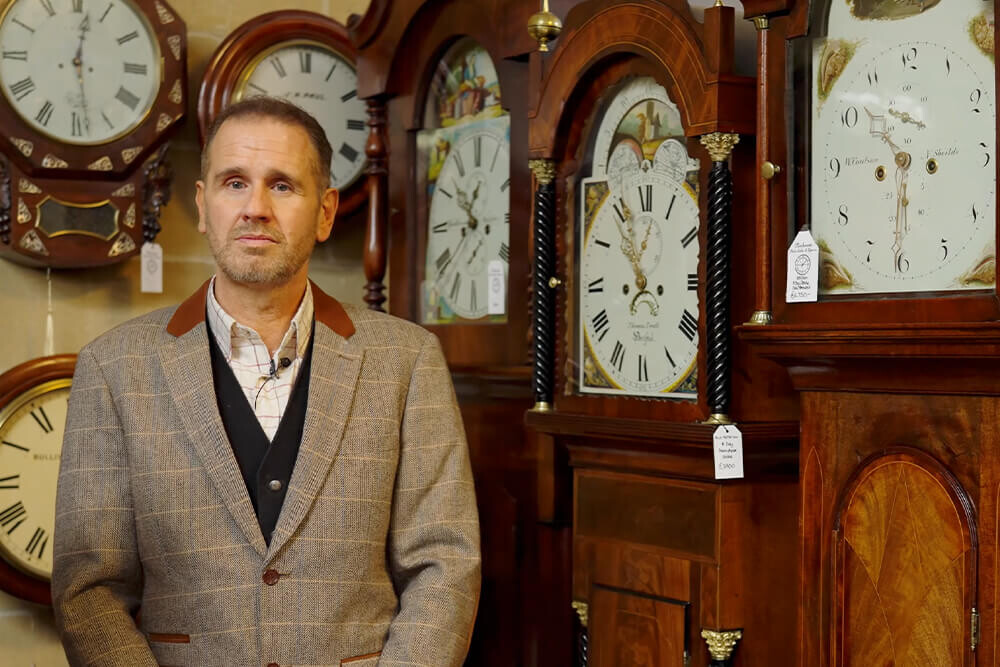
From Pendulum Swing to Platform Time: Antique Clocks in Daily Life
Antique clocks are often admired for their cases and dials, but their real character emerges when they are experienced as working objects. The slow swing of a longcase pendulum and the clear face of a railway clock each reflect a different need: one brought measured time into the household, while the other helped organise a fast-moving public network.
For collectors considering antique clocks for sale, this practical history matters. It explains why each form looks the way it does, which details deserve attention and how a clock may fit into daily life today.
The domestic rhythm of antique longcase clocks
Antique longcase clocks were designed around a long pendulum and descending weights. Their tall cabinets protected the mechanism while giving cabinetmakers space to create an impressive piece of furniture. Hood, trunk and base work together, so proportion is just as important as decoration.
Regional materials and fashions produced enormous variety. Oak cases may have a quiet country character, while walnut and mahogany examples can display veneers, crossbanding and delicate inlay. Dial design also evolved from brass chapter rings and cast spandrels to colourful painted scenes. The appeal of Scottish painted dial longcase clocks shows how strongly local artistic traditions could shape a practical timekeeper.
A longcase clock also changes the atmosphere of a room. Its tick is steady rather than hurried, and its strike can mark the hours throughout the house. Buyers should consider these sounds alongside dimensions, condition and style, because a clock will become part of the home’s everyday rhythm.
Railway clocks and the value of instant clarity
Railway clocks answered a public need for consistent, easily read time. Bold numerals, strong hands and uncluttered dials allowed staff and passengers to understand the time quickly. Their direct design still feels remarkably modern, which helps explain why they remain popular in both period and contemporary interiors.
Authenticity requires more than a railway-style appearance. Dial signatures, movement stamps, case markings and documented provenance should support one another. Collectors can see how maker and transport history combine in this rare John Walker railway clock, where the wider historical setting adds meaning to the object itself.
Repainted dials and replacement movements are not always unacceptable, but they must be described honestly. A genuine railway association can influence both interest and value, so evidence should be assessed carefully rather than accepted from a label or bold claim.
How condition tells a clock’s story
A mechanical clock that has survived for generations will normally show evidence of maintenance. Pivots, bushes, lines and suspension parts wear through use. Sensitive repairs protect the movement and allow it to operate safely, while poor work may damage original material or disguise faults.
Cases tell their own story. Minor knocks, fading and polished edges can create a coherent patina, whereas aggressive refinishing may remove the surface that connects the clock with its age. Look for consistent wear and ask whether mouldings, feet, doors or sections of veneer have been replaced.
The relationship between movement, dial and case is especially important in longcase clocks. Altered seat boards, unexplained holes or awkward fitting can indicate that components were associated later. Such clocks may still be attractive, but their description and price should reflect the change.
Practical points when viewing antique clocks for sale
Begin with exact measurements and the intended location. A longcase clock needs ceiling clearance, a stable floor and space for its door, weights and pendulum. A railway clock requires secure wall fixings and enough surrounding space for the dial to remain visually clear.
Ask when the movement was last serviced, what work was completed and whether delivery includes professional installation. Longcase clocks must be transported correctly and set in beat at their destination. Even a healthy movement may run poorly if the case is not level or the pendulum is disturbed.
A specialist selection of antique clocks for sale with Clockwise can help buyers compare forms, proportions and periods while receiving informed guidance about condition and upkeep.
Choosing a clock for lasting enjoyment
Rarity and famous names can be appealing, but they should not overshadow quality and integrity. A modest clock with balanced proportions, a convincing surface and a well-maintained movement may be more satisfying than a grander example assembled from unrelated parts.
Consider how the clock will be used. Will its strike suit the room? Is weekly winding practical? Can it remain in a stable position away from heavy vibration and direct heat? These simple questions help turn an attractive purchase into a successful long-term relationship.
Timekeeping with a human presence
Longcase and railway clocks represent two sides of historic timekeeping: the private rhythm of the home and the shared precision of public travel. Their mechanisms, cases and dials were shaped by those roles, giving each type an identity that modern reproductions rarely match.
When chosen with care, an antique clock does more than decorate a space. It introduces movement, sound and a tangible connection with earlier makers and owners—continuing to measure daily life long after its original setting has changed.