
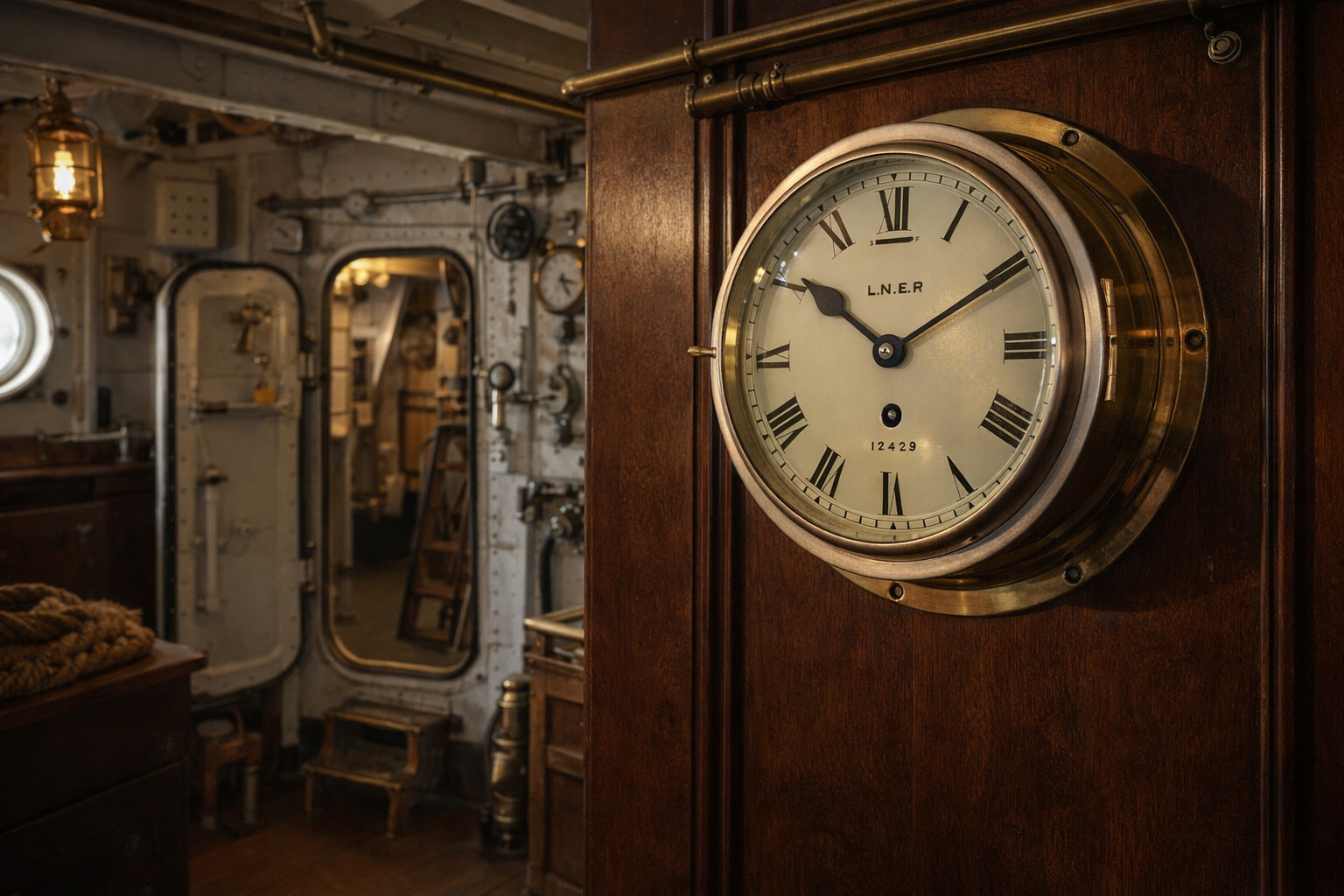
Antique Clock Buying Notes: Longcase Presence and Railway Precision
Antique clocks can transform a room, but the best purchase begins with careful observation. Antique longcase clocks offer architectural height, warm timber and visible mechanical rhythm. Antique railway clocks bring disciplined dial design and a direct link with Britain’s transport history.
When comparing antique clocks for sale, buyers should consider proportion, originality, restoration and practical ownership together. No single signature or decorative feature can replace an assessment of the complete object.
Longcase presence begins with proportion
A longcase clock is organised into hood, trunk and base. The hood protects the dial and movement, the trunk houses the pendulum and weights, and the base anchors the tall cabinet. These sections should feel balanced even when regional designs differ.
Oak examples often appear restrained and structural, while walnut and mahogany cases may use veneers, crossbanding, stringing and inlay. Timber, mouldings, columns and door shapes can provide useful clues to age and place.
The relationship between craftsmanship and historical purpose is considered further in longcase craft and railway heritage.
Dials reveal fashion and function
Brass longcase dials may include silvered chapter rings, cast spandrels, subsidiary seconds and calendar apertures. Later painted dials introduced flowers, landscapes and figures. The dial’s style and scale should suit both movement and cabinet.
Check that winding holes align correctly and that the dial sits naturally within the hood. Unused holes, altered seat boards or awkward spacing may indicate that components were associated later.
An associated clock may remain attractive and useful, but the changes should be understood and reflected in the description and price.
Railway precision demanded clarity
Railway clocks needed to communicate time immediately. Strong numerals, visible minute tracks and bold hands allowed staff and passengers to read them quickly. That purposeful simplicity gives genuine examples their lasting appeal.
Attribution should be supported by evidence. Maker’s names, movement marks, case stamps, inventory numbers and company identifiers should agree with the clock’s construction. A rare John Walker railway clock demonstrates how maker and context can strengthen an individual piece.
Ask whether the dial has been repainted and whether the movement belongs to the case. Railway styling alone does not prove railway service.
Restoration should preserve evidence
Mechanical clocks need maintenance. Pivots, bushes, lines, springs and suspension components wear through use and may require skilled repair or replacement. Appropriate servicing protects the mechanism and enables continued operation.
Cabinet and dial work should be restrained. Mellow timber, small marks and gentle fading often provide valuable evidence of age. Heavy sanding, thick varnish or extensive repainting may remove that evidence.
Request the date and details of recent work. Service records and restoration notes help future owners understand what has changed and plan ongoing care.
Consider scale, sound and installation
A longcase clock needs adequate ceiling height, a level floor and clearance for its door, pendulum and weights. Professional delivery and setup help ensure that the movement stands correctly in beat.
A railway clock needs secure wall fixings and enough surrounding space for the dial to remain clear. Avoid persistent damp, strong heat and heavy vibration.
Listen to the tick and strike before deciding. Ask how often the clock needs winding and whether the striking mechanism can be controlled. These practical details shape daily enjoyment.
Comparing antique clocks for sale
Useful listings provide exact dimensions, movement photographs, restoration details, service information and known provenance. Reviewing several antique clocks for sale helps buyers compare condition, quality, rarity and integrity.
A famous signature is meaningful only when physical evidence supports it. A modest clock with compatible parts and honest ageing may offer greater satisfaction than an ornate example with an uncertain history.
Keep clear buying notes
Record dimensions, known restoration, service history and provenance before making a decision. Compare the dial, case and movement as a group, and ask the seller to explain any inconsistency.
The right clock should suit both its historical identity and its next setting. Whether you choose the commanding presence of a longcase clock or the precise clarity of a railway clock, informed attention is the foundation of a confident purchase.