
From Tall Cases to Station Dials: Choosing an Antique Clock
Antique clocks were designed around the places where people needed time. Antique longcase clocks stood in homes, combining pendulum mechanics with cabinetmaking. Antique railway clocks served stations and offices, presenting clear information in busy public environments.
For buyers comparing antique clocks for sale, these original settings provide useful clues. The form, materials and movement should all support the clock’s stated identity, while restoration and provenance should be explained honestly.
Why longcase clocks became tall
The longcase form gives a pendulum room to swing and allows driving weights to descend. A wooden cabinet protects these working parts and turns a mechanical necessity into a substantial piece of furniture.
Hood, trunk and base should create balanced proportions. Oak cases often have a restrained regional quality, while walnut and mahogany may feature veneers, crossbanding, stringing and inlay. The timber and construction can help indicate period and place.
This overview of collecting longcase and railway clocks explains how practical engineering influenced both domestic and public designs.
Longcase dials and regional style
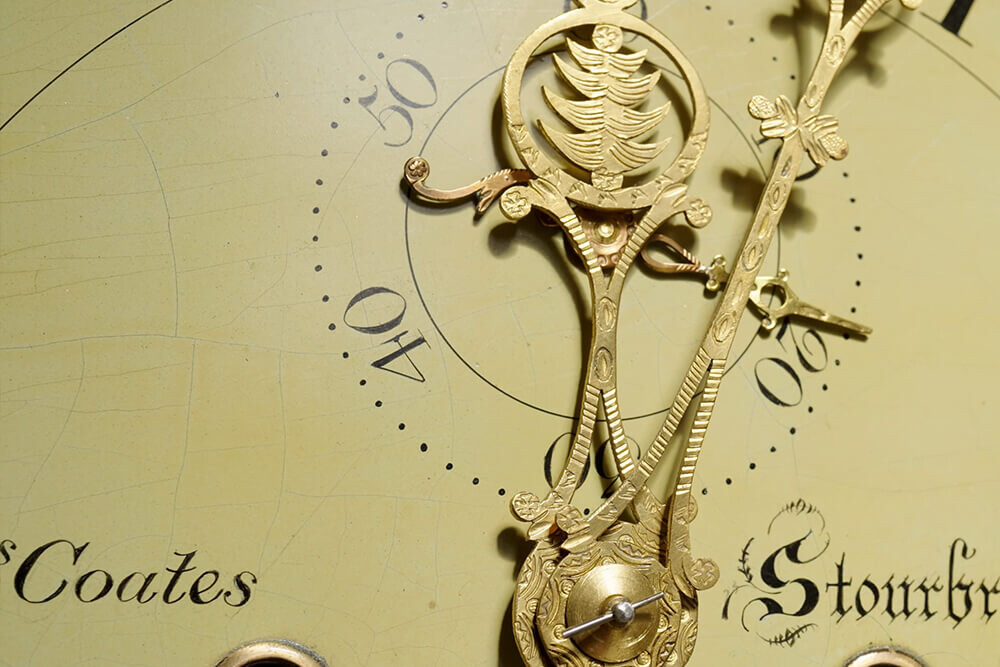
Brass dials may include silvered chapter rings, cast spandrels, subsidiary seconds and calendar apertures. Painted dials later introduced flowers, landscapes and figures, often reflecting regional taste.
The dial should fit naturally within the hood, with winding holes properly aligned to the movement. Altered seat boards, unexplained holes or awkward spacing can suggest that case, dial and mechanism were associated later.
An associated clock may still be attractive and functional, but the changes should be understood and reflected in its description and price.
Station dials were built for clarity
Railway clocks needed to be read quickly from a distance. Strong numerals, visible minute tracks and bold hands supported timetables and daily operations. Their direct graphic design remains one of their greatest attractions.
A railway-style face alone does not prove railway service. Maker’s signatures, movement marks, case stamps, company identifiers and provenance should support one another. A feature on a railway clock in Gloucestershire shows how maker and context add meaning to an individual clock.
Ask whether the dial has been repainted and whether the movement is original to the case. Clear answers are more valuable than a vague promise of complete originality.
Condition should tell a coherent story
Natural wear can add character. Mellow timber, small marks and light dial ageing show that a clock has survived ordinary use. Heavy sanding, thick varnish and unnecessary repainting may remove the evidence collectors use to understand age.
Mechanical service is expected. Pivots, bushes, lines, springs and suspension components may need repair or replacement. Skilled work protects the mechanism and allows it to continue operating safely.
Ask when servicing took place and what was done. Retained invoices and restoration notes help future owners care for the clock and support its history.
Match scale to the intended room
A longcase clock needs sufficient ceiling height, a level floor and clearance for its door, weights and pendulum. Professional delivery and setup are worthwhile because the movement must be placed correctly in beat.
A railway clock saves floor space but requires secure wall fixings. Give its dial enough room to remain visually clear, and avoid locations affected by persistent damp, excessive heat or strong vibration.
Consider sound as well as size. A longcase tick and strike may become a noticeable part of the room, while winding creates a regular routine of ownership.
Comparing antique clocks for sale
A helpful listing includes accurate dimensions, movement photographs, service details and a clear account of restoration. Viewing antique clocks for sale with Clockwise allows buyers to compare form, quality and condition with specialist guidance.
Price should reflect craftsmanship, integrity, rarity, condition and provenance together. A modest but coherent clock may offer more lasting satisfaction than a highly decorated example made from unrelated components.
Choose the clock that suits its next setting
Longcase clocks bring architectural presence, warm timber and measured movement into a home. Railway clocks offer graphic clarity and a tangible connection with transport history. Both can work equally well in traditional or contemporary surroundings.
Study the complete object, ask direct questions and retain its records. With thoughtful placement and periodic specialist maintenance, the right antique clock can continue fulfilling its purpose while adding character to a new setting.