
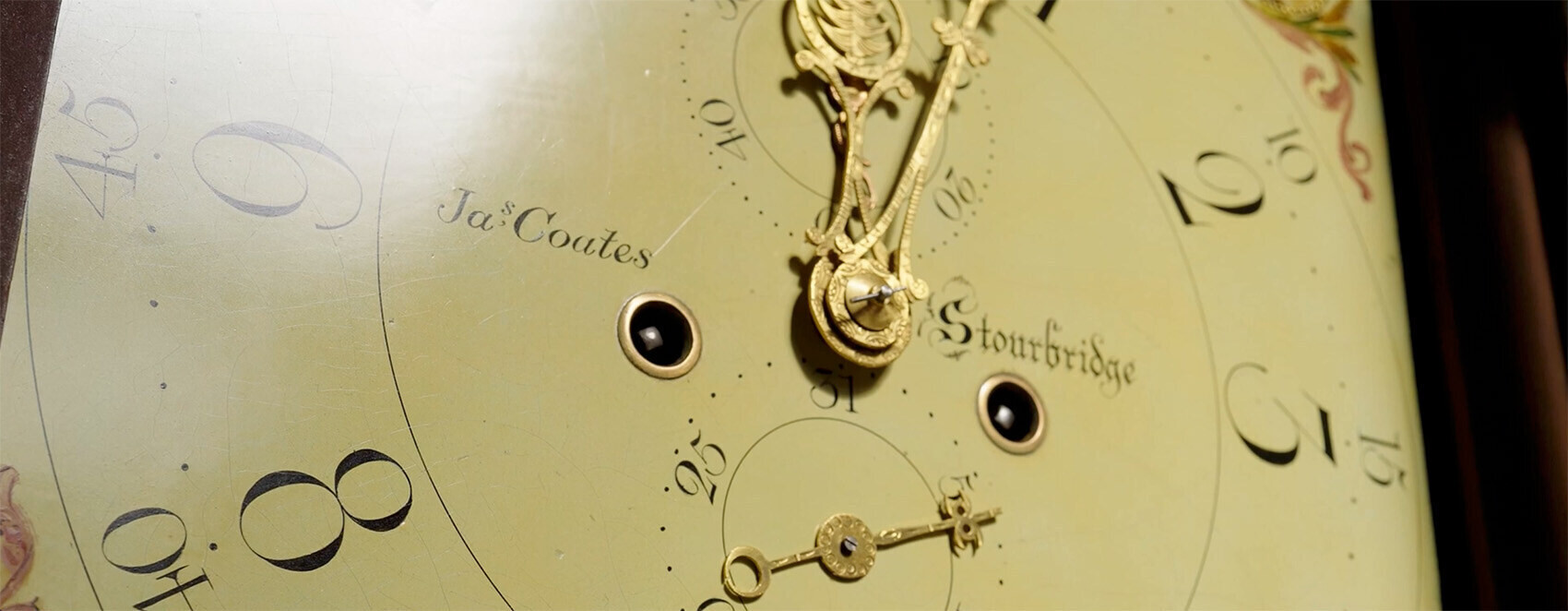
Wood, Brass and Railway Time: Finding the Right Antique Clock
An antique clock is a meeting point of materials, mechanics and history. In antique longcase clocks, timber and brass combine with pendulum engineering to create a substantial piece of domestic furniture. In antique railway clocks, bold dials and practical cases reflect the need to make time clear across stations and offices.
These differences give collectors a wide choice, but the fundamentals remain consistent. When comparing antique clocks for sale, examine whether the design is coherent, the restoration is honest and the clock will suit the place where it is expected to live.
How timber shapes a longcase clock
The cabinet is central to the identity of a longcase clock. Oak can produce a warm, restrained appearance, while walnut and mahogany allowed cabinetmakers to introduce veneers, crossbanding, stringing and inlay. Timber choice often reflects period, region and the intended market.
Look beyond decorative detail to the proportions of hood, trunk and base. The hood should frame the dial comfortably, the trunk must house the pendulum and descending weights, and the base should provide visual stability. A balanced case makes even a relatively plain clock feel distinguished.
The relationship between domestic elegance and practical timekeeping is explored further in antique clocks worth discovering.
Brass and painted dials
Early longcase dials frequently used brass, with silvered chapter rings, cast spandrels and subsidiary indications. Later painted dials introduced floral decoration, landscapes and figures. Both types can be desirable when their style, dimensions and date agree with the movement and case.
Check how the dial sits inside the hood and whether the winding holes align with the movement. An awkward fit, filled holes or altered seat boards can reveal that components were associated later. Such changes should be reflected in the description and price.
Surface matters too. Original silvering, aged paint and gentle wear can communicate history, while aggressive polishing or repainting may remove useful evidence.
Railway clocks and purposeful design
Railway timekeeping demanded clarity. Large numerals, strong hands and visible minute tracks allowed staff and passengers to read a clock quickly. The result was a direct visual language that still feels comfortable in modern interiors.
Authenticity depends on more than appearance. Dial signatures, movement marks, case stamps, inventory numbers and documentary provenance should support one another. A rare John Walker railway clock shows how a known maker and credible historical context can strengthen an individual clock’s appeal.
Reproduction faces and clocks assembled from unrelated components exist, so buyers should ask whether the dial has been repainted and whether the movement is original to the case.
Condition should be understood, not simplified
A mechanical clock that has worked for generations will need maintenance. Pivots and bushes wear, suspension components age and lines may require replacement. Careful service protects the movement and allows it to continue functioning safely.
Good restoration preserves as much original material as possible. Cabinet repairs should stabilise loose joints, veneers or mouldings without erasing historic colour. Dial work should be disclosed, particularly where repainting has been extensive.
Ask when the movement was last serviced, what work was completed and whether supporting records are available. An honest explanation is more valuable than an unsupported claim that a clock is entirely original.
Match the clock to the room
Longcase clocks need adequate ceiling height, a level floor and clearance for the door, weights and pendulum. They should be installed by someone experienced in setting a movement in beat. Consider the sound of the tick and strike as well as the physical scale.
Railway clocks save floor space but require secure wall fixings. Their dials benefit from breathing room, so avoid crowding them with pictures or shelving. Keep all mechanical clocks away from persistent damp, strong heat and heavy vibration.
Comparing antique clocks for sale
Useful listings include exact dimensions, movement photographs, restoration details and information about delivery. Browse a range of antique clocks for sale to understand how case quality, maker, condition, provenance and rarity influence price.
A celebrated signature may add interest, but it should never distract from inconsistencies. A modest, well-proportioned clock whose movement, dial and case belong together can offer greater satisfaction than an elaborate composite example.
Choose materials and history that speak to you
Some collectors respond to the mellow surface of old oak, others to finely figured mahogany or the disciplined face of a station clock. The right choice should continue to reward close looking after the first impression.
Once purchased, retain documents and service records, avoid unnecessary movement and use an experienced specialist for periodic care. Whether built for a household or a railway platform, a well-chosen antique clock can preserve its materials, purpose and story for another generation.