
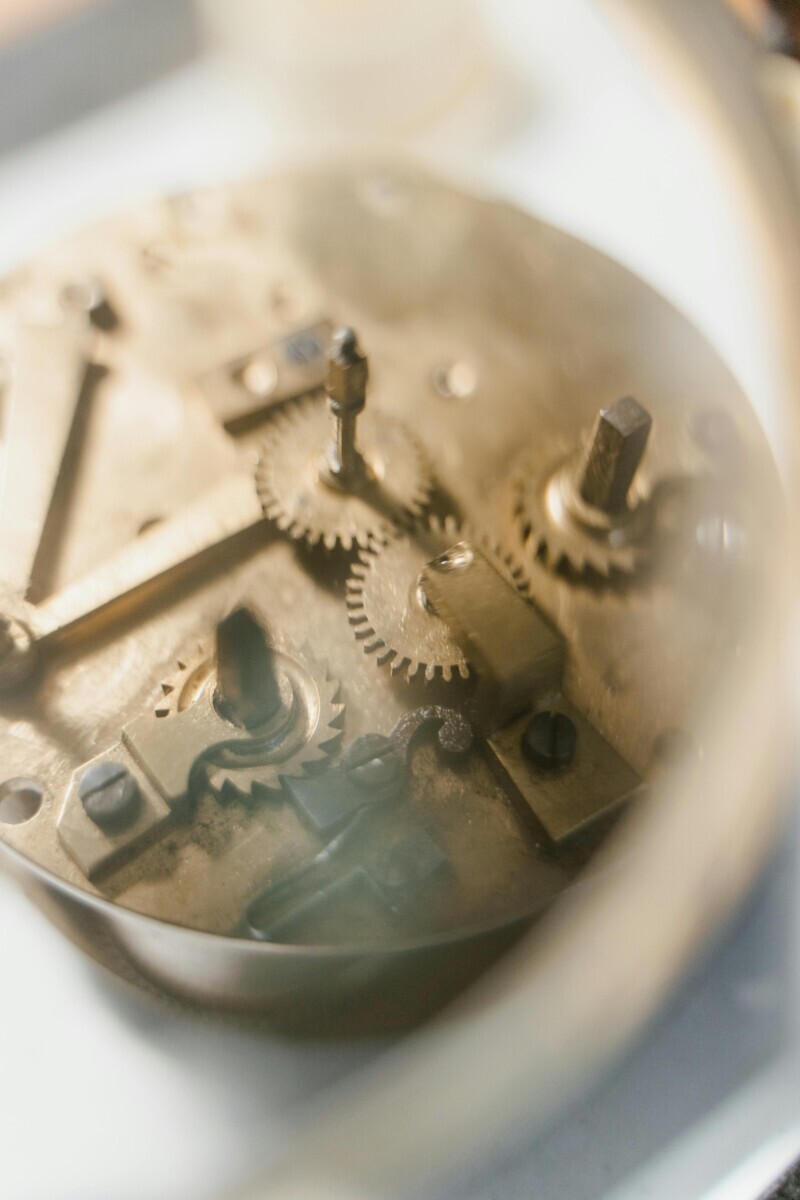
Built to Last: What Antique Longcase and Railway Clocks Reveal
Antique clocks reveal their quality through the way they were built. Antique longcase clocks combine cabinetmaking with pendulum engineering, while antique railway clocks use clear dials and robust cases to deliver dependable public time. Both were expected to work, not simply decorate a room.
That practical heritage helps collectors judge antique clocks for sale today. A convincing example should show agreement between case, dial and movement, supported by honest restoration and credible provenance.
Construction begins with purpose
The tall cabinet of a longcase clock gives its pendulum room to swing and allows the weights to descend. Hood, trunk and base protect the mechanism while creating an architectural piece of furniture. Good proportions make these separate sections feel unified.
Railway clocks answer a different need. Staff and passengers had to read the time quickly, so strong numerals, bold hands and clear minute tracks were essential. Cases were practical and sufficiently durable for stations, offices and signal boxes.
Longcase cabinets preserve regional character
Oak, walnut and mahogany cases each speak a different visual language. Oak can feel restrained and structural, while walnut and mahogany may carry veneers, crossbanding, stringing or inlay. Mouldings, columns, door shapes and pediments often point towards regional traditions.
Painted dials can add another layer of local identity. These Scottish painted dial longcase clocks demonstrate how landscapes, flowers and figures turned domestic timekeeping into expressive craftsmanship.
Buyers should check that the dial fits naturally in the hood and that the movement sits correctly on its seat board. Unused holes, altered supports or awkward alignment may suggest that components were brought together later.
Railway clocks reward evidence
A railway-style appearance is not enough to prove historic service. Maker’s signatures, movement marks, case stamps, inventory numbers and documentary provenance should support one another. Repainted dials and replacement mechanisms are common enough to require careful questions.
Named makers can provide valuable context when the rest of the clock is consistent. An exceptional John Walker railway clock shows how maker, construction and railway history can combine to strengthen an object’s identity.
Condition should be described precisely. Ask which elements are original, what has been restored and whether any markings have been renewed or added.
Wear is different from neglect
Gentle wear, mellow timber and light dial ageing can contribute to a convincing historic surface. They show that an object has existed and been handled over time. Active damage, loose joints and a dirty or dry movement are different matters and require professional attention.
Mechanical servicing is part of responsible ownership. Pivots, bushes, lines, springs and suspension components may need repair or replacement. Skilled work preserves the movement and prevents avoidable loss of original material.
Heavy refinishing can reduce character. Sanding, thick varnish or unnecessary repainting may erase the evidence collectors use to understand age and construction. Good restoration stabilises without disguising.
Practical checks before buying
Obtain exact dimensions. A longcase clock needs adequate ceiling height, a stable level floor and clearance for its door, weights and pendulum. It should be delivered and set up by someone experienced in putting a movement in beat.
A railway clock requires secure wall fixings and enough clear space for its dial to be read comfortably. Keep mechanical clocks away from persistent damp, strong heat and heavy vibration.
Sound also matters. Listen to the tick and strike, ask how frequently the clock needs winding and find out whether the striking mechanism can be controlled.
Comparing antique clocks for sale
A useful listing includes movement photographs, service information, restoration details and a clear account of provenance. Comparing several antique clocks for sale helps show how craftsmanship, condition, rarity and integrity influence price.
A celebrated name is valuable only when the physical evidence supports it. A modest clock with harmonious components and honest wear can offer greater satisfaction than an elaborate example assembled from unrelated parts.
A durable connection with history
Longcase and railway clocks have survived because their construction served a clear purpose. One brought reliable time into the home through a finely made cabinet; the other coordinated public life with immediate legibility.
Choose a clock whose details remain interesting after the first impression. Retain its records, avoid unnecessary movement and arrange periodic specialist care. Built to last and carefully maintained, an antique clock can continue revealing its craftsmanship for generations.