
Railway Clock to buy in Gloucestershire
British railway clocks from the turn of the twentieth century are among the most powerful symbols of an age shaped by precision, industry, and movement. These clocks once regulated the timing of departures, arrivals, and daily operations across the rail network, influencing everything from commerce to ordinary life. At Clockwise, we are delighted to showcase an outstanding survivor from this period: a rare John Walker eight-day fusee railway wall clock, originally supplied to the London & North Western Railway around 1910. This remarkable timepiece represents the highest standards of British railway horology and is now available to view on our website.
Full details of this clock can be found here:
John Walker Railway Clock, 8 Inch – Stunning
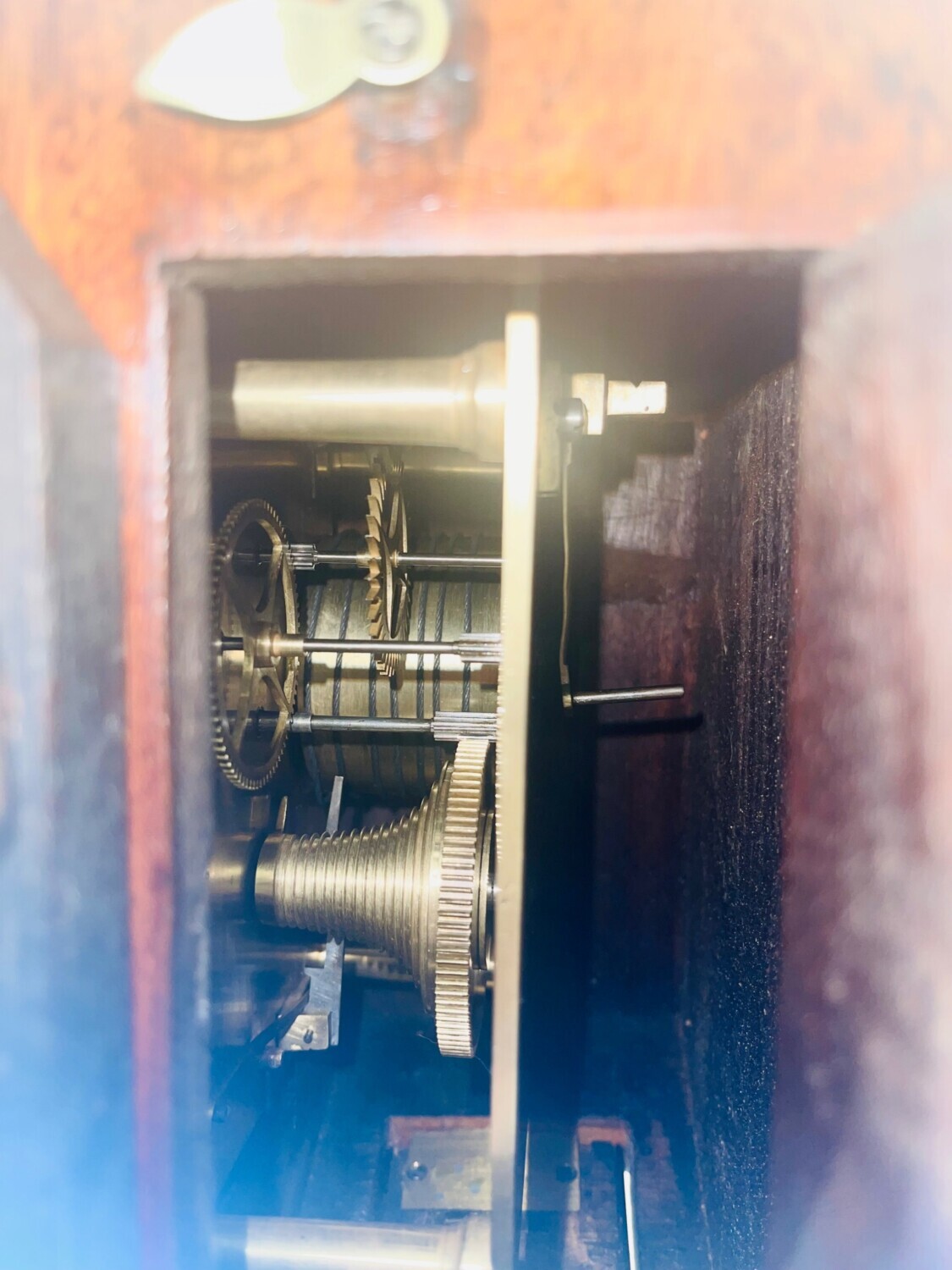
The clock is powered by a wire-driven eight-day fusee movement with rectangular plates and an anchor escapement, a configuration chosen specifically for accuracy, resilience, and long-term reliability. Such movements were ideally suited to the demanding conditions of railway stations and offices, where uninterrupted timekeeping was essential. The movement has been fully overhauled and serviced, ensuring dependable operation while preserving its original character. In keeping with Clockwise standards, it is supplied with a three-year guarantee, reflecting confidence in both the mechanism and the quality of restoration.

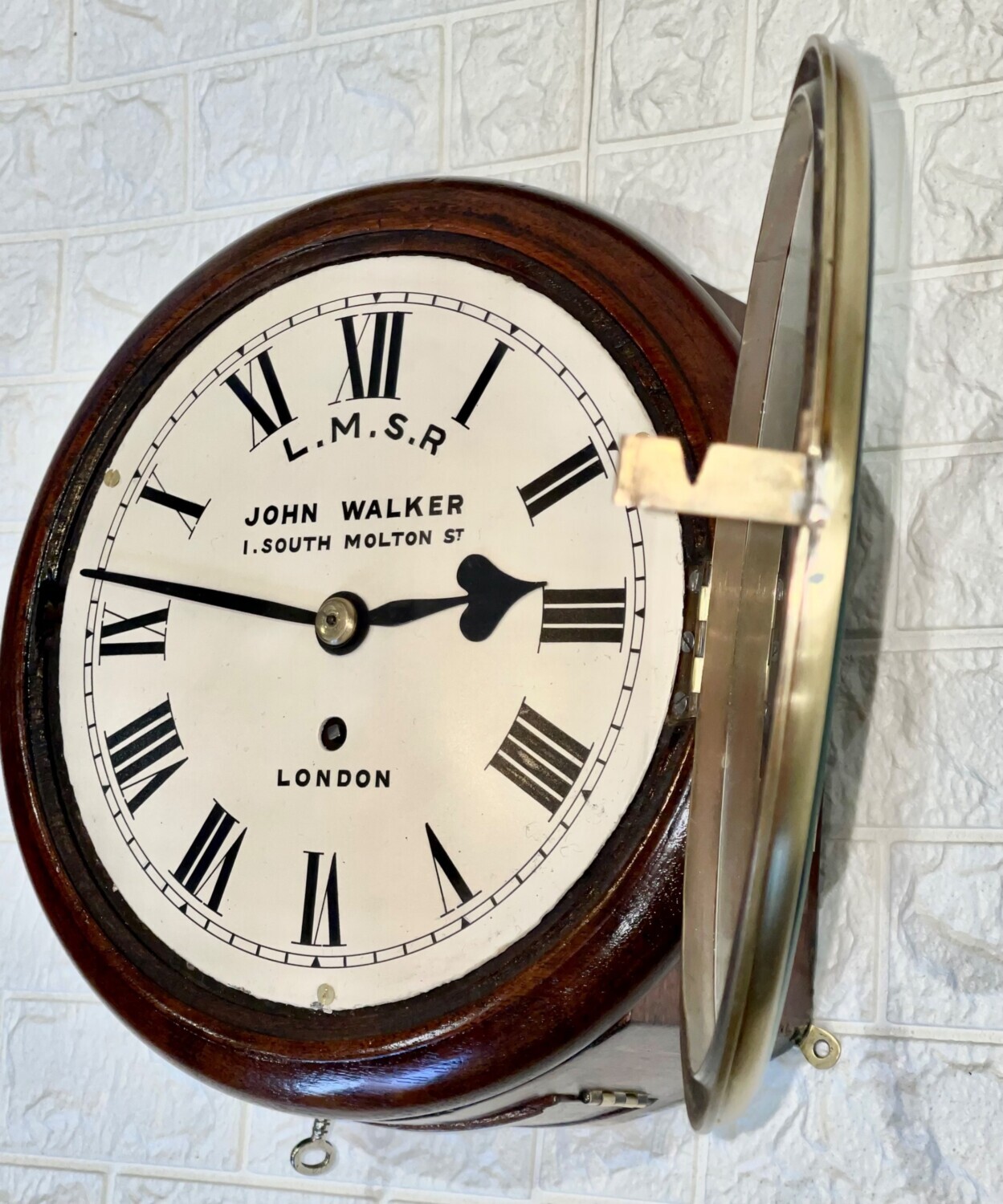
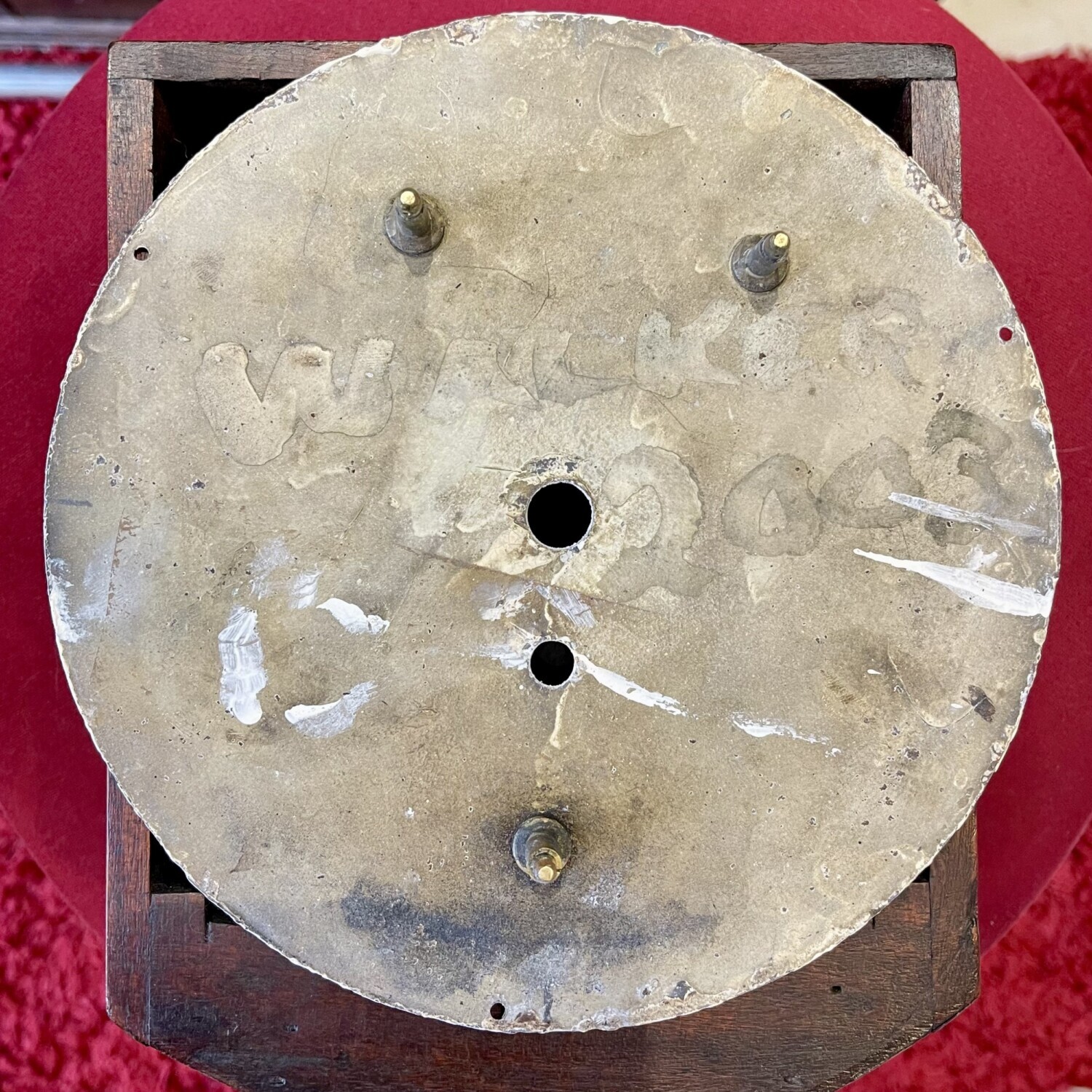
The eight-inch painted dial remains in superb condition and has been carefully restored with sensitivity to period detail. It carries the correct signature, “John Walker, 1 South Molton Street, L.M.S.R, London,” firmly dating the clock to the London Midland & Scottish Railway era following the early twentieth-century railway amalgamations. The rear of the dial displays the typical service markings found on genuine working railway clocks, reinforcing both authenticity and documented operational history.
Original fittings have been retained throughout, including the cast brass bezel with its heavy bevelled glass, which adds depth and authority to the clock’s appearance. The bezel secures using the original tab system and is complemented by classic spade hands, completing the unmistakable visual language of a true railway clock. Surviving examples that retain these original components are becoming increasingly uncommon.
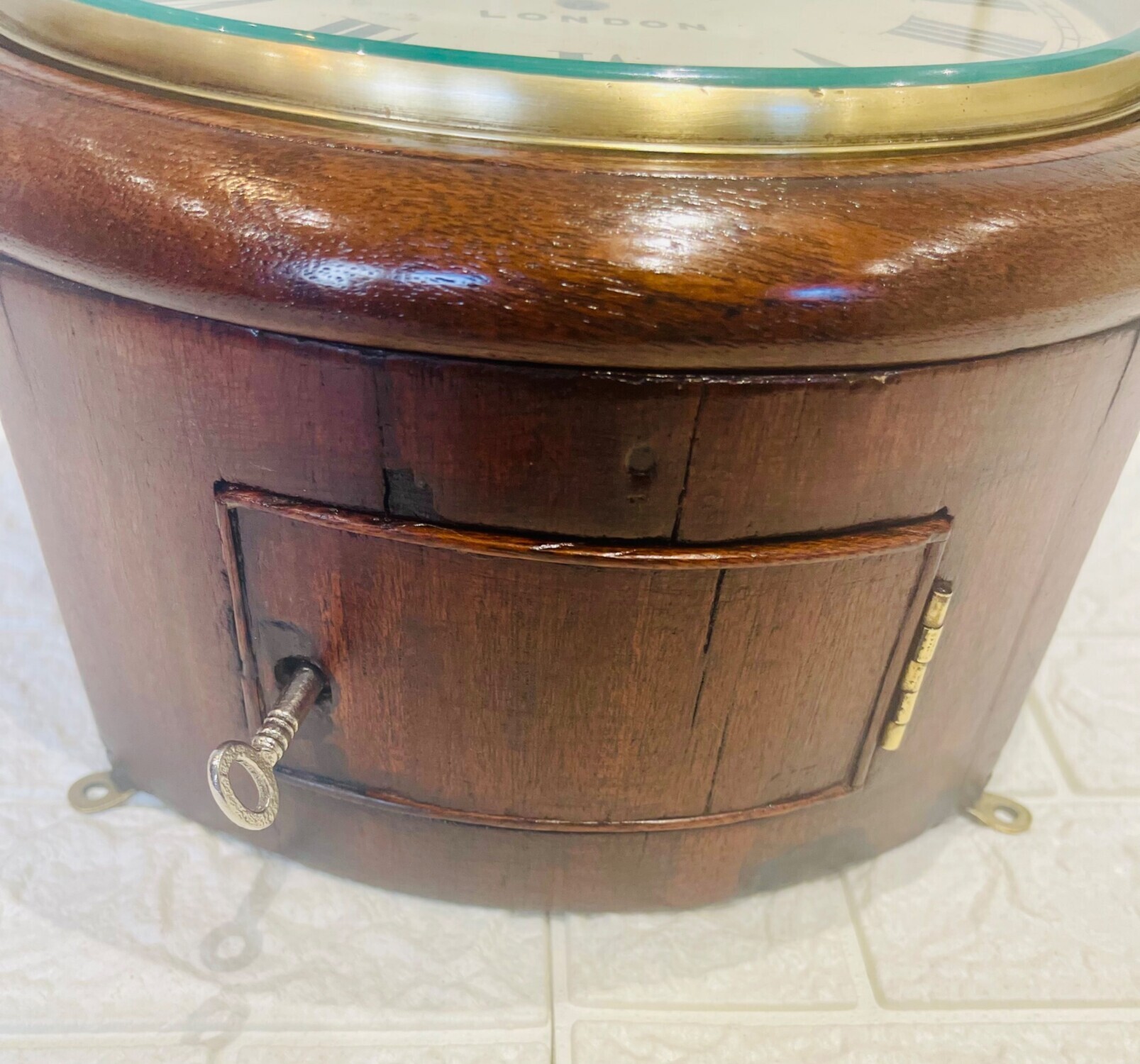
The dial is framed by a one-piece turned mahogany surround that has been expertly restored to reveal rich colour and deep, natural patination. The circular surround is pegged to the back box in the traditional manner and incorporates a working lock to the lower door, a side inspection door, and lower stabilising hooks. These functional features reflect the clock’s original purpose, where durability, access, and stability were essential requirements.
A particularly desirable detail is the original London & North Western Railway plaque, numbered 2003, which remains attached to the side of the back box. The LNWR was one of Britain’s most influential railway companies and later formed part of the London Midland & Scottish Railway in 1923. Railway clocks that retain their original plaques are increasingly scarce, making this example especially appealing to collectors and historians alike.
John Walker was among the most respected clockmakers supplying Britain’s railway system. Established in 1845, the firm produced clocks and watches for major railway companies and held long-term maintenance contracts that ensured consistent timekeeping across the network. Operating from their well-known premises at 1 South Molton Street, John Walker clocks earned a reputation for precision and reliability. Today, their railway clocks are highly sought after, with comparable examples achieving prices exceeding £2,000 at auction.
This clock dates from the Victorian period and measures approximately 25cm in height and width, with a depth of 13cm. Its proportions make it an ideal wall clock, commanding presence without dominating its surroundings. Whether placed in a study, hallway, office, or traditional interior, it offers both visual impact and historical significance.
Clockwise specialises in fine longcase, bracket, fusee, and railway clocks, serving clients from the worlds of business, film, sport, royalty, and aristocracy, while remaining equally committed to private collectors and traditional customers. Our reputation is founded on careful restoration, specialist knowledge, and an uncompromising commitment to authenticity.
This John Walker Railway Clock stands as a rare and original survivor from a defining chapter in British horology and railway history. It is one of several exceptional fusee and railway clocks due to arrive on the market and represents an outstanding opportunity for collectors seeking a genuine, investment-grade timepiece with strong provenance and enduring appeal.
For full specifications, detailed images, and current availability, please view the clock here:
John Walker Railway Clock, 8 Inch – Stunning
What Makes Railway Clocks So Historically Important?
Railway clocks occupy a unique position in horological history because they were created as precision tools rather than decorative objects. During the height of the railway age, accurate and synchronised timekeeping was critical to safety and operational efficiency. Even a small discrepancy could disrupt schedules or lead to serious consequences. Railway companies therefore demanded clocks that were robust, dependable, and capable of running continuously in busy and often challenging environments.
A defining feature of railway clocks is the strict standardisation imposed by railway authorities. Dials were designed for maximum legibility at a distance, with bold numerals, clear minute tracks, and uncluttered layouts. Cases were built for strength, incorporating solid bezels, thick glass, and secure fixings to resist tampering or accidental movement. Many railway clocks were fitted with eight-day fusee movements, chosen for their ability to deliver consistent power and accurate timekeeping over extended periods.
Provenance is another key factor that elevates railway clocks above many domestic timepieces. Original plaques, signed dials, inspection marks, and service records often allow a clock’s working life to be traced to a specific railway company or location. These tangible links to Britain’s industrial and transport heritage add depth, authenticity, and lasting value, making railway clocks some of the most respected and collectable timepieces in British horology.