
A Rare John Walker Railway Clock from the Golden Age of British Rail
Among the most evocative timepieces of the early twentieth century are British railway clocks, objects that once governed the rhythm of travel, industry, and daily life. At Clockwise, we are pleased to present a particularly fine example from this important period: a rare John Walker eight-day fusee railway wall clock, originally supplied to the London & North Western Railway around 1910. This exceptional clock is now available to view on our website and represents the very best of British railway timekeeping.
You can view the full details of this clock here:
John Walker Railway Clock, 8 Inch – Stunning
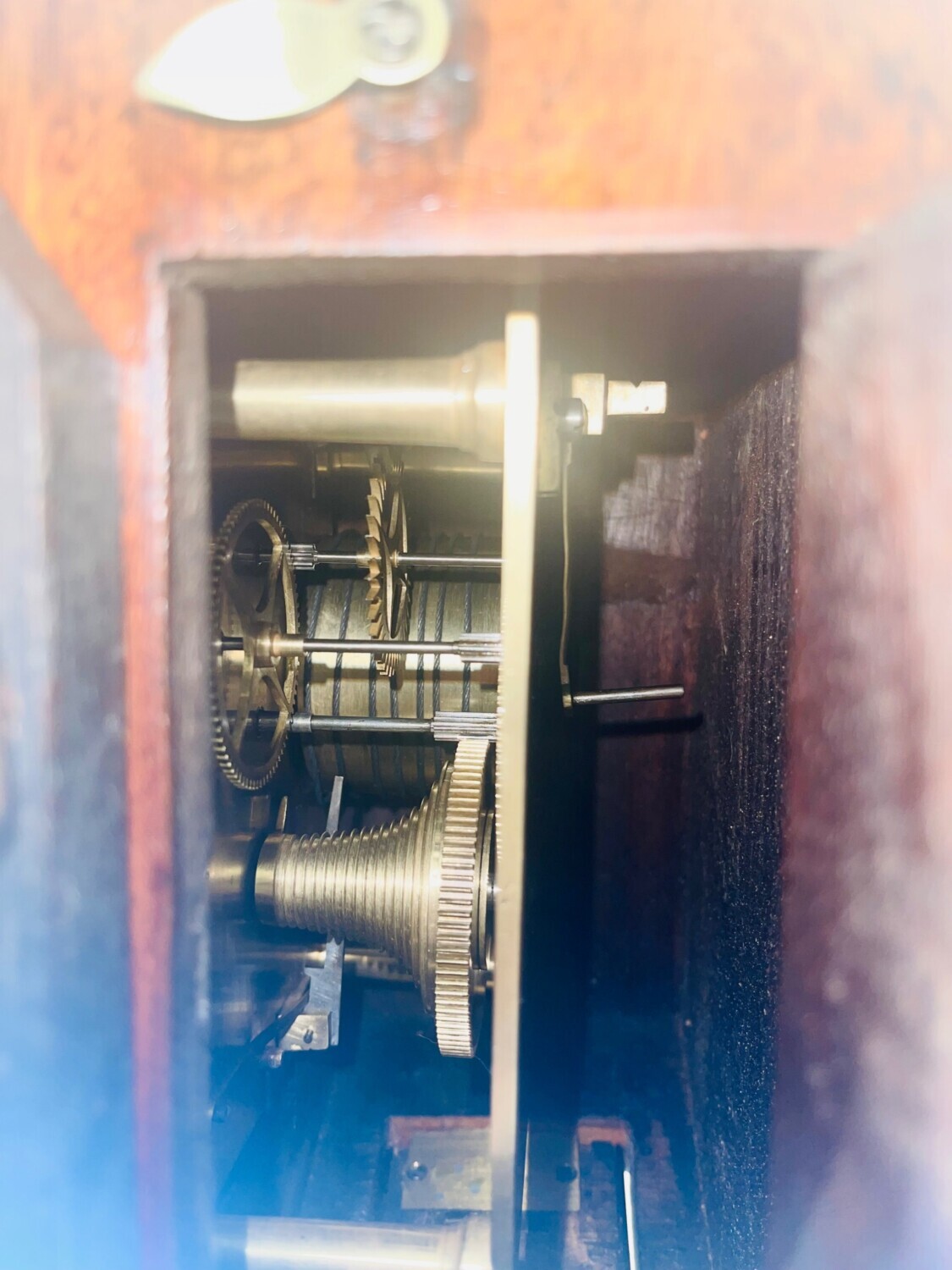
This clock features a wire-driven eight-day fusee movement with rectangular plates and an anchor escapement, a design favoured for its reliability and accuracy in demanding environments such as railway stations and offices. The movement has been fully overhauled and serviced, ensuring dependable performance while retaining complete historical integrity. As with all clocks restored by Clockwise, it is supplied with a three-year guarantee, reflecting the confidence we have in both the workmanship and the mechanism itself.

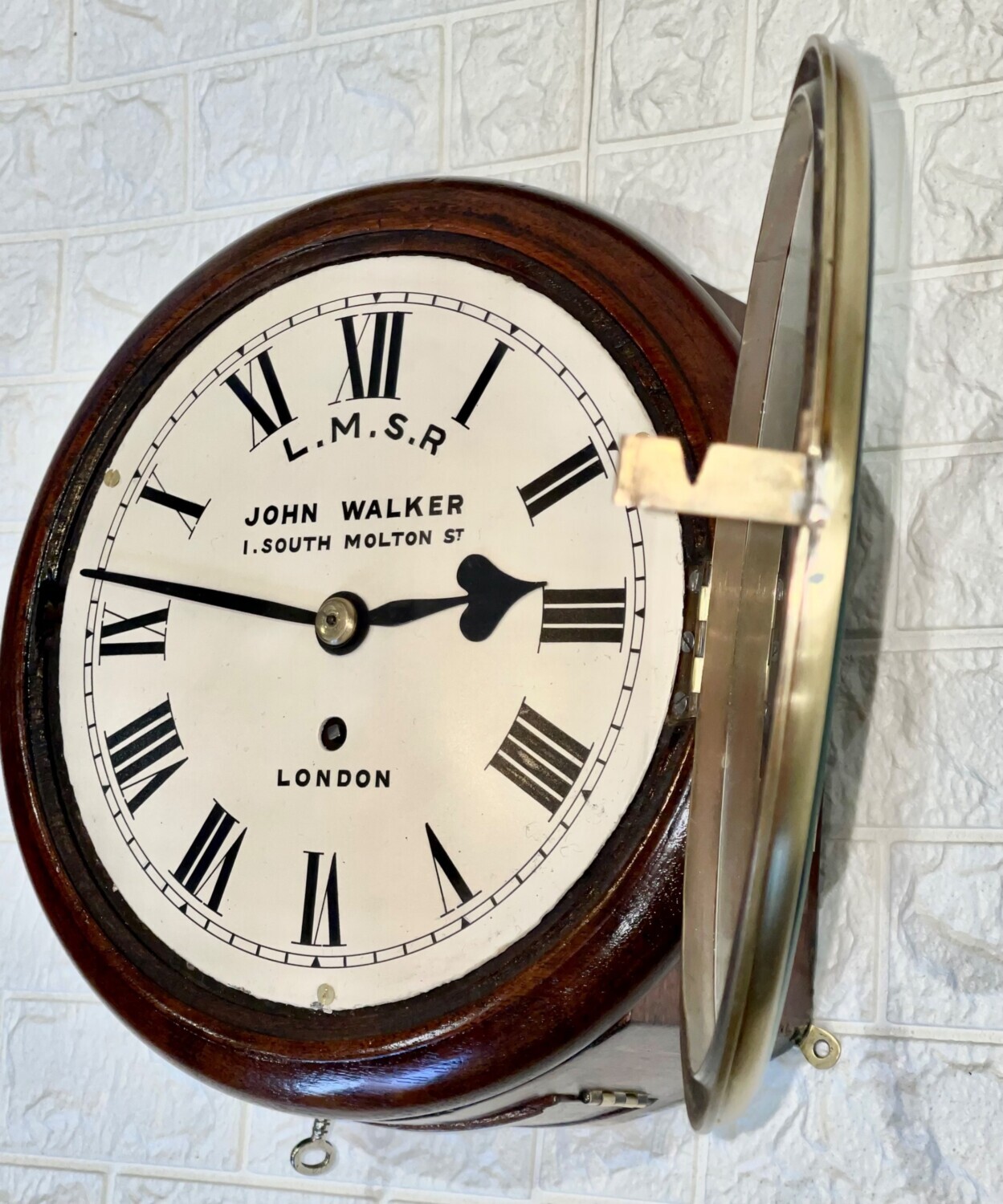
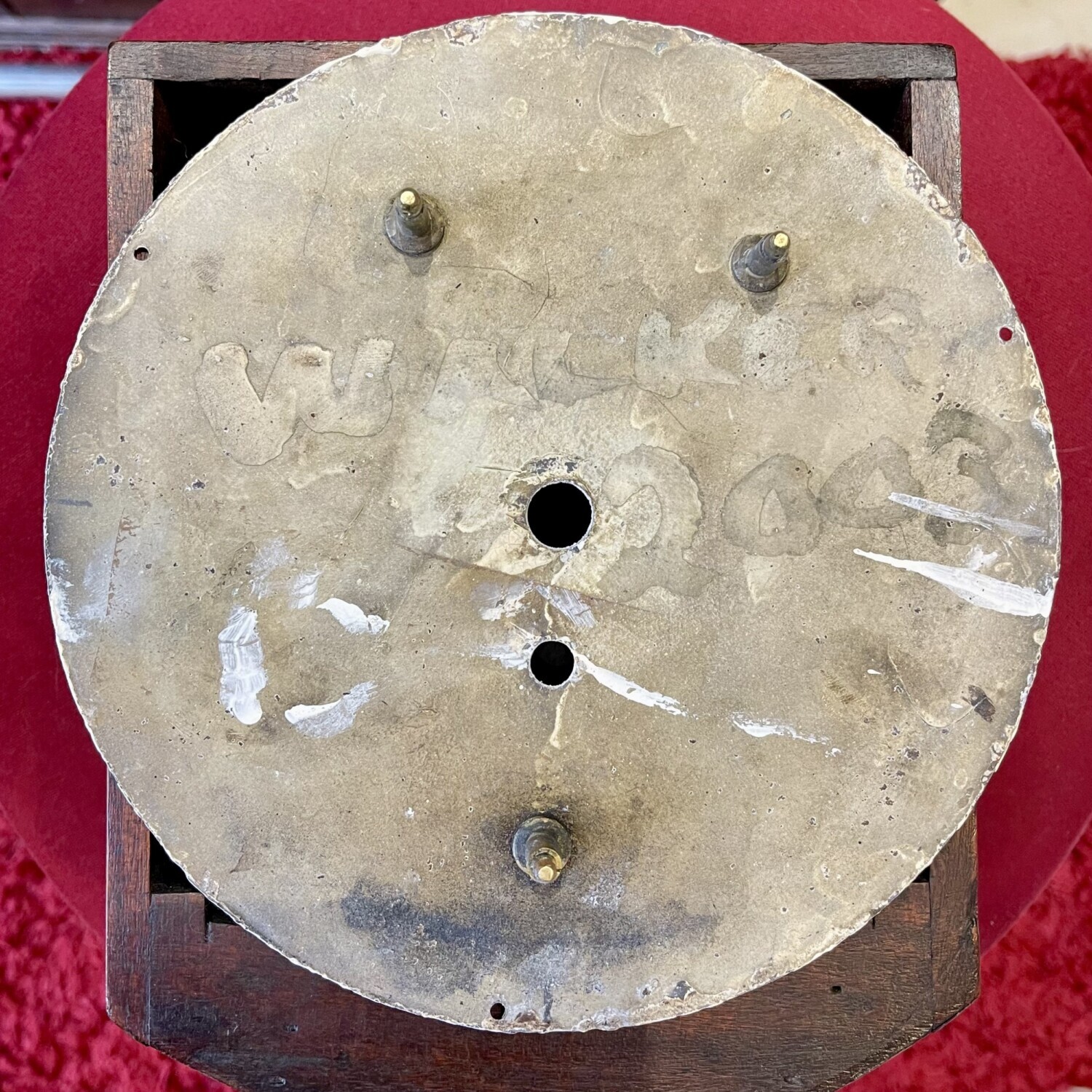
The eight-inch painted dial is in excellent condition and has been carefully and sympathetically restored. It bears the correct and historically appropriate signature, “John Walker, 1 South Molton Street, L.M.S.R, London,” a detail that firmly places the clock within the London Midland & Scottish Railway period following the railway amalgamations of the early twentieth century. The reverse of the dial carries the familiar service annotations expected on genuine railway clocks, further supporting its authenticity and working history.
The clock retains its original cast brass bezel fitted with heavy bevelled glass, a feature that adds both visual depth and period character. The bezel locks securely into place using the original tab system, and the clock is fitted with classic spade hands, completing the unmistakable railway aesthetic. These original fittings are increasingly rare to find intact and contribute significantly to the clock’s desirability.
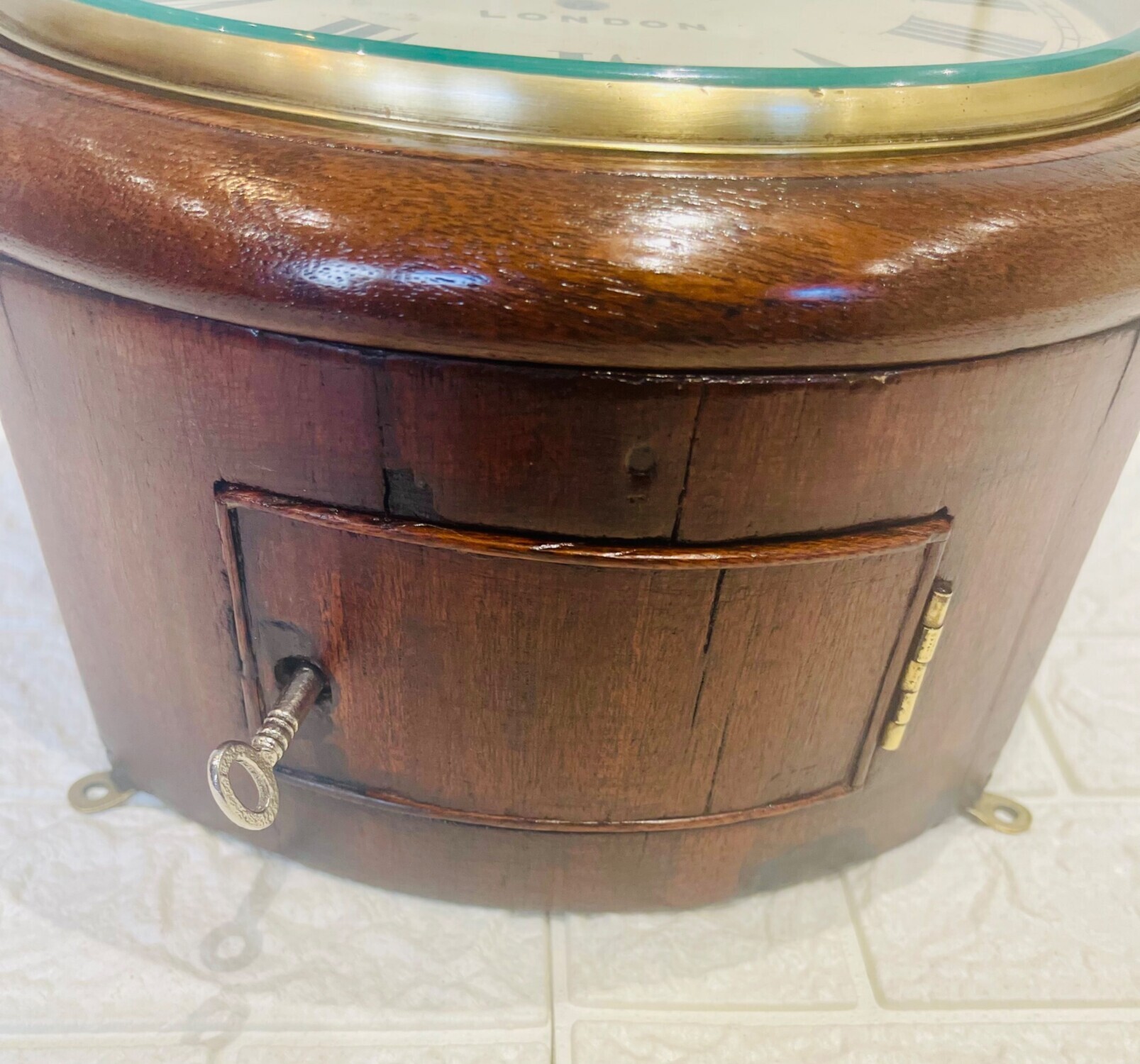
Surrounding the dial is a beautifully restored one-piece turned mahogany surround, displaying rich colour and deep patination that only well-aged timber can achieve. The circular surround is pegged to the back box in the traditional manner and includes a working lock to the lower door, a side inspection door, and lower stabilising hooks. These practical features speak to the clock’s original working role, where access and stability were essential.
Of particular note is the original London & North Western Railway plaque, numbered 2003, still attached to the side of the back box. The LNWR was one of the most significant railway companies of the era and became part of the London Midland & Scottish Railway in 1923. Surviving clocks that retain their original railway plaques are increasingly scarce, making this example especially appealing to serious collectors of railwayana.
John Walker was one of the most important clockmakers associated with British railways. Founded in 1845, the firm supplied clocks and watches to many of the principal railway companies and also held long-term maintenance contracts, ensuring consistent timekeeping across vast rail networks. Operating from their prestigious premises at 1 South Molton Street, John Walker clocks became synonymous with accuracy, reliability, and quality. Their railway clocks are now highly sought after, with recent auction results seeing comparable examples achieve prices in excess of £2,000.
This particular clock dates from the Victorian period and measures approximately 25cm in height and width, with a depth of 13cm, making it a perfectly proportioned wall clock that commands attention without overwhelming a space. Whether displayed in a study, hallway, office, or period interior, it carries both visual presence and historical weight.
At Clockwise, we specialise in fine longcase, bracket, fusee, and railway clocks, working with clients from across the worlds of business, film, sport, royalty, and aristocracy, while remaining equally committed to private collectors and traditional clients. Our reputation is built on careful restoration, deep knowledge, and an uncompromising approach to quality and authenticity.
This John Walker Railway Clock is a rare and original survivor from a defining era of British horology and railway history. It is one of several exceptional fusee and railway clocks due to be coming onto the market, and an outstanding opportunity for collectors seeking a genuine, investment-grade timepiece with clear provenance and enduring appeal.
For full specifications, photographs, and availability, please view the clock here:
John Walker Railway Clock, 8 Inch – Stunning
Why Are Railway Clocks So Special?
Railway clocks occupy a unique place in horological history because they were never decorative objects first and foremost; they were precision instruments built to serve a critical public function. In the age of steam, accurate and synchronised timekeeping was essential for the safe operation of railway networks. A discrepancy of even a minute could result in missed connections, operational chaos, or serious accidents. As a result, railway companies demanded clocks that were exceptionally reliable, highly legible, and robust enough to operate continuously in busy, often harsh environments.
What sets railway clocks apart is the standardisation imposed by the railway companies themselves. Dials were designed to be instantly readable at a distance, typically featuring bold numerals, clear minute markers, and uncluttered layouts. Cases were engineered for durability, with solid bezels, thick glass, and secure fittings to prevent tampering or accidental movement. Movements were expected to run accurately over long periods, which is why many railway clocks were fitted with eight-day fusee mechanisms that delivered consistent power and dependable timekeeping.
Railway clocks also carry a strong sense of provenance. Unlike many domestic clocks, their original locations, ownership, and service history can often be traced through engraved plaques, dial signatures, inspection marks, and maintenance records. These details connect each clock to a specific railway company, station, or operational role, giving it a tangible link to Britain’s industrial and transport heritage. For collectors, this documented history adds depth, authenticity, and long-term value.